

Choosing business software can feel simple until you compare vendors side by side. Every provider promises flexibility, security, savings, and excellent support. Yet the strongest sales pitch doesn’t always signal the strongest fit.
That’s why software vendor evaluation matters. A structured review helps you compare technology, pricing, security, service, and long-term value before signing a contract. For U.S. businesses, it can also reduce operational and cybersecurity risks.
This guide explains how to evaluate a software vendor using practical criteria, weighted scoring, due diligence, demonstrations, references, and total-cost analysis. The goal is simple: choose software that works today without becoming tomorrow’s headache.
Table of Contents
ToggleWhat Is Software Vendor Evaluation and Why Does It Matter?
Software vendor evaluation is the process of examining a provider before purchasing its software. You assess the product, company, security posture, pricing, support, integrations, and future direction. In other words, you evaluate both the tool and the team standing behind it.
The right software vendor comparison criteria can reveal weaknesses that a polished demo hides. NIST recommends supplier due diligence before acquisition because organizations need informed decisions about technology and supplier risks.
How to Build a Software Vendor Evaluation Process
A strong evaluation starts with business needs rather than vendor brochures. Define the problem first. Then document software functionality and business requirements, expected outcomes, users, integrations, security needs, and budget. This foundation keeps the buying team focused.
Next, create a software vendor evaluation checklist and assign responsibilities to IT, finance, security, operations, and end users. A consistent process makes the software vendor selection process for enterprises easier to defend and less vulnerable to personal preferences.
10 Key Software Vendor Evaluation Criteria to Compare
The best software vendor evaluation criteria for businesses cover more than features. Your team should examine functionality, security, integrations, cost, scalability, implementation, support, stability, usability, and product direction. Each factor deserves a weight based on its importance to your organization.
For example, security may deserve 20% for a healthcare company. A smaller marketing team might give usability greater weight. This flexible enterprise software vendor evaluation framework prevents every vendor from receiving the same score simply because everyone uses identical questions.
Evaluate Software Features and Functional Fit
Start by comparing the platform against real workflows. Review software functionality and business requirements rather than counting features. A system with 200 functions may still disappoint if it handles your core process poorly.
Ask vendors to demonstrate actual tasks your employees perform. A CRM vendor, for example, should show lead capture, reporting, automation, and data transfer. This approach makes software proof of concept evaluation far more useful than a generic sales presentation.
Assess Software Integration, Security, and Compliance
A powerful application becomes less useful when it cannot communicate with your existing systems. Examine software integration and API capabilities, authentication options, data exports, webhooks, and compatibility with your current technology stack. Integration problems can create expensive manual work.
Security deserves equal attention. Your vendor security and compliance assessment should cover encryption, access controls, incident response, vulnerability management, data retention, and relevant certifications. The FTC recommends putting security expectations into vendor contracts and verifying compliance rather than simply trusting vendor promises.
Compare Vendor Pricing and Total Cost of Ownership
Price tags can be misleading. Your total cost of ownership software evaluation should include subscriptions, implementation, migration, training, integrations, customization, premium features, support, and renewal increases. A low starting price doesn’t guarantee a low long-term cost.
During negotiations, investigate software vendor pricing and hidden costs carefully. Ask whether onboarding, additional users, storage, API access, reporting, or advanced support cost extra. A complete financial picture makes competing proposals much easier to compare fairly.
Evaluate Vendor Reliability, Scalability, and Long-Term Viability
A vendor can offer excellent software today while creating uncertainty tomorrow. Your software vendor financial stability assessment should consider company history, ownership, market position, customer base, and investment in product development. You don’t need perfect financial visibility. You need enough evidence to judge continuity risk.
Then examine software scalability and performance requirements. Ask how the platform handles larger datasets, more users, additional locations, and heavier workloads. Review uptime records and recovery practices. Also conduct a software product roadmap evaluation to understand where the product is heading.
Test Implementation, Customer Support, and Service Levels
Implementation often determines whether a software purchase succeeds. Review the software implementation and onboarding process, including migration, configuration, training, testing, and launch support. Ask who performs each task and what happens when the project falls behind schedule.
Support matters just as much after launch. Your vendor customer support and service level agreement review should cover response times, escalation paths, availability, and uptime commitments. Strong support won’t eliminate every problem. It can prevent small problems from becoming expensive operational fires.
Use a Software Vendor Evaluation Scorecard
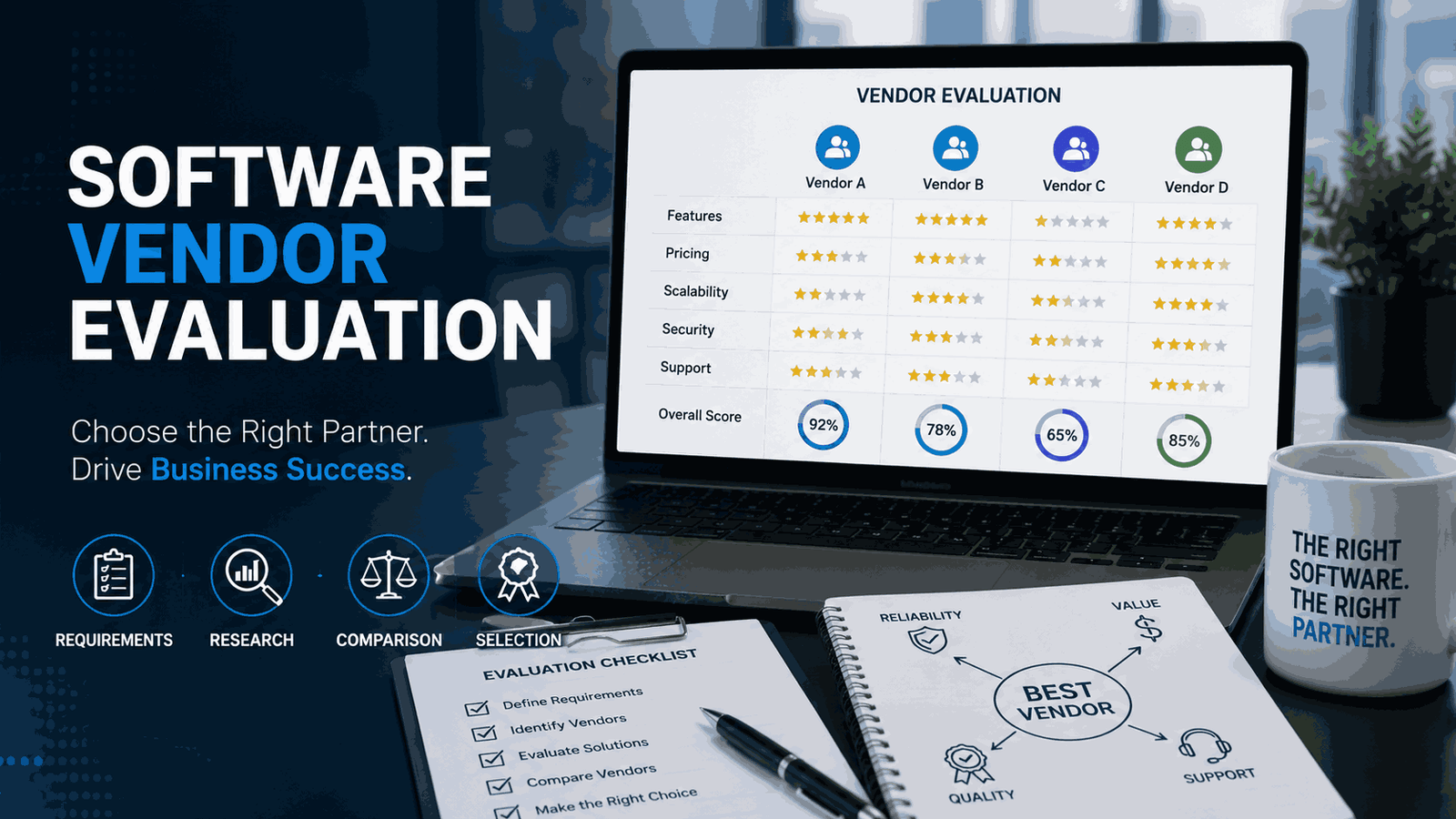
A scorecard turns subjective opinions into measurable comparisons. Assign each criterion a weight based on business importance. Then score every vendor using the same scale. This creates a practical software vendor evaluation scorecard template for procurement teams and decision-makers.
Your software vendor selection criteria and scoring model can use a one-to-five scale. Multiply each score by its assigned weight. The result provides a clearer comparison, although the final decision should still consider serious risks that numbers may hide.
| Evaluation Criteria | Weight | Vendor A | Vendor B | Vendor C |
|---|---|---|---|---|
| Functional Fit | 20% | — | — | — |
| Security & Compliance | 15% | — | — | — |
| Integration | 15% | — | — | — |
| Pricing & TCO | 15% | — | — | — |
| Scalability | 10% | — | — | — |
| Implementation | 10% | — | — | — |
| Support & SLA | 10% | — | — | — |
| Vendor Stability | 5% | — | — | — |
Conduct Vendor Demos, RFPs, and Reference Checks
A strong demo should resemble your working environment. Give vendors the same scenarios and questions. Your software vendor RFP evaluation criteria should cover technical capabilities, pricing, implementation, security, support, and contractual requirements. Consistency makes responses easier to compare.
References add another layer of reality. Conduct software vendor customer reference checks with companies that resemble yours. Ask about implementation delays, support quality, unexpected charges, uptime, renewals, and product limitations. Customers often reveal details that sales presentations conveniently skip.
Make the Final Software Vendor Selection
The final decision should combine scorecard results, technical reviews, demos, references, and contract findings. Your software vendor due diligence checklist should also confirm data ownership, exit terms, renewal clauses, security obligations, and service commitments before approval.
A good software vendor risk assessment process separates manageable concerns from deal-breaking risks. For example, a missing report might have a workaround. Weak data controls shouldn’t receive the same treatment. Document the final reasoning so stakeholders understand why the chosen vendor won.
Common Software Vendor Evaluation Mistakes to Avoid
Many businesses rush because they want the new system running quickly. That pressure can encourage poor decisions. Common problems include focusing on price, trusting scripted demos, ignoring integration, skipping references, and failing to involve end users.
The strongest software vendor evaluation best practices treat procurement as a long-term business decision. Your software vendor contract risk assessment should also examine termination rights, data deletion, liability, security obligations, and service commitments. Those details matter when the relationship becomes difficult.
FAQs
What is software vendor evaluation?
Software vendor evaluation is a structured review of a software provider before purchase. It examines product fit, security, integrations, pricing, implementation, support, scalability, reliability, and long-term business value.
What are the main criteria for evaluating a software vendor?
The main criteria include functionality, security, compliance, integration, pricing, total cost, scalability, implementation, customer support, vendor stability, usability, and product roadmap. Your organization should weight these factors according to business priorities.
How do you evaluate a software vendor?
Define requirements first. Then shortlist providers, compare features, review security, calculate total cost, conduct demonstrations, check references, score vendors, negotiate contracts, and complete legal and security reviews before selecting a provider.
What should be included in a software vendor evaluation checklist?
A useful checklist should cover business requirements, features, integrations, security, compliance, pricing, implementation, training, support, SLAs, scalability, vendor stability, contracts, data ownership, references, and exit requirements.
How do you compare software vendors objectively?
Use identical requirements, questions, demonstrations, scoring rules, and evidence standards. A weighted scorecard helps reduce personal bias. However, serious security or contractual risks should receive special attention even when the numerical score looks attractive.
What is a software vendor evaluation scorecard?
It is a comparison tool that assigns weights and scores to vendor criteria. Businesses can use the results to compare providers consistently and identify which vendor offers the strongest overall fit.
How do you evaluate the total cost of a software vendor?
Calculate subscription or licensing costs first. Then add implementation, migration, training, integrations, customization, support, storage, upgrades, and expected renewal increases. Compare the estimated cost across the entire contract period.
What questions should you ask a software vendor?
Ask about security, integrations, implementation timelines, support response times, uptime, data ownership, pricing changes, contract terms, product development, customer retention, and references. Request written answers whenever possible.
How do you evaluate software vendor security?
Review encryption, authentication, authorization, vulnerability management, incident response, data retention, audit evidence, security testing, and relevant compliance requirements. NIST also highlights supplier due diligence, secure development practices, and software supply-chain risks.
Why are customer references important when evaluating software vendors?
Customer references provide firsthand evidence about implementation, reliability, support, pricing surprises, and vendor responsiveness. Choose references with similar workloads and business needs because their experience will be more relevant to your decision.
What are common software vendor evaluation mistakes?
Common mistakes include choosing based only on price, relying on polished demos, ignoring hidden costs, skipping security reviews, overlooking integrations, failing to check references, and neglecting contract exit terms.
How long does a software vendor evaluation process take?
The timeline depends on company size, software complexity, security requirements, procurement rules, and the number of vendors. A small evaluation may take several weeks. Enterprise procurement can take several months.
Final Thoughts
Choosing software isn’t merely about finding an impressive product. You’re choosing a technology partner that may handle important data, support critical workflows, and influence your operating costs for years.
A disciplined software vendor evaluation process gives you something valuable: clarity. By combining requirements, security reviews, TCO analysis, demonstrations, references, and weighted scoring, you can make a decision based on evidence rather than excitement.
For U.S. organizations, supplier risk deserves particular attention. NIST’s 2026 due-diligence guidance emphasizes researching supplier risks before acquisition, including resilience, foundational cyber practices, provenance, and supply-chain tiers.
The smartest approach is simple. Define what you need, test what vendors promise, verify what they claim, and negotiate what matters. That process takes more effort upfront. It can save considerably more effort after the contract is signed.

1 Comment
Pingback: Amy Sherrill 2026: From Tim Duncan’s Ex-Wife to a Legacy of Family and Charity